
Gardening
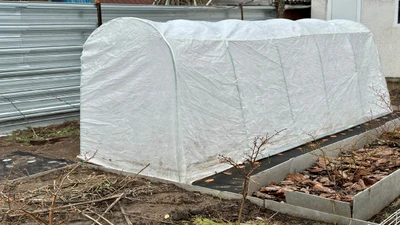
Cold Frames vs. Row Covers for Raised Beds
Oct 6th 2026
One of the greatest joys of gardening is harvesting fresh produce long after the growing season has
…
See More

The 1/4" Thread x Barb Connector is the essential link between your water source and elevated micro-sprinklers. Primarily used to attach Rigid Risers to a poly mainline, this fitting features a threaded end that screws securely into the riser and a barbed end that snaps directly into your distribution tubing. It is one of the most practical irrigation fittings for gardeners looking to create custom height adjustments for flower beds and ground cover.
Beyond riser assemblies, this versatile adapter can be used to connect 1/4" micro tubing to PVC pipe (when tapped) or other equipment requiring a standard 10-32 UNF thread. Its reliable single-barb design ensures a tight grip on vinyl or poly micro tubing, preventing blowouts even under fluctuating pressures.
Key dimensions for system planning.
| Specification | Details |
|---|---|
| Product Type | Thread x Barb Adapter |
| Connection 1 | 1/4" Barb (Fits .170" ID Tubing or Punched Mainline) |
| Connection 2 | 10-32 UNF Thread (Male) |
| Material | Acetal (UV Stabilized) |
| Operating Pressure | Max 30 PSI |
| MPN | FBT250 |
| Manufacturer | Tempo |
| Compatibility | Fits Rigid Risers & 1/4" Micro Tubing |
The most common use is attaching a rigid riser to a mainline.
Step 1: Prep the Riser
Take your Rigid Riser and screw the threaded end of this connector into the base of the riser. Use the back of a punch tool or pliers to ensure it is snug.
Step 2: Punch the Mainline
Use a Punch Tool to create a hole in your 1/2" or 3/4" poly tubing where you want the riser to stand.
Step 3: Connect
Push the barbed end of the connector (now attached to the riser) directly into the punched hole. You should feel it snap into place.
Step 4: Stabilize
For taller risers, we recommend using a Stabilizer Stake to keep the assembly vertical and secure in the soil.
Ensure this fits your setup:
Everything you need for a custom micro-irrigation layout:
Oct 6th 2026

Oct 5th 2026

Oct 2nd 2026

Oct 1st 2026